
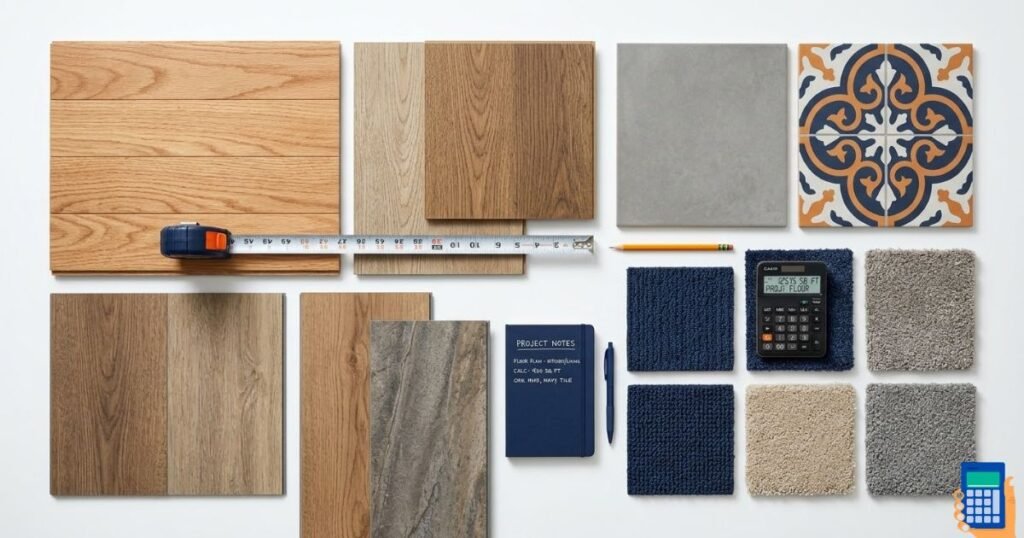
Fast, accurate flooring estimates for homeowners, contractors, and DIYers across the United States.
Estimate material, wastage & total cost for any room, instantly
Planning a flooring project is exciting, until you try to figure out how much material you actually need. Whether you are tiling a kitchen, laying hardwood in your living room, or replacing carpet in a bedroom, getting the numbers right before you head to the store can save you hundreds of dollars. That is exactly what our free Flooring Calculator is designed to do. Simply enter your room dimensions, the length and width of any space, and get an instant estimate for your total floor area, material quantity, and flooring cost, all in one place.
No sign-up. No fees. Just fast, reliable results built for homeowners, contractors, and DIYers across the United States.
A flooring calculator is an online tool that helps you estimate how much flooring material you need for any room or space. By entering basic measurements like length and width, the calculator converts your room dimensions into square feet or square footage, the standard unit used by flooring retailers and contractors across the US.
Beyond just calculating floor area, a good flooring calculator also factors in waste, overage, material cost per square foot, and labor charges. This gives you a complete picture of your total flooring cost before you spend a single dollar, so there are no surprises when you reach the checkout or pay your installer.
Our calculator supports all major floor types, ceramic tile, hardwood, laminate, vinyl plank, and carpet, and lets you add multiple rooms at once, making it ideal for whole-home flooring projects or room-by-room renovations.
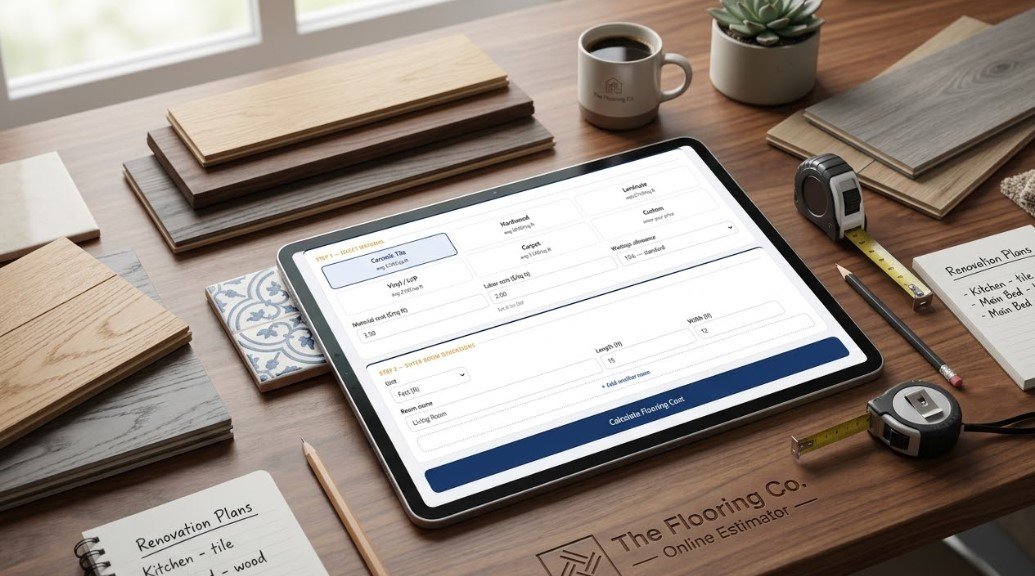
Using our flooring calculator takes less than a minute. Here is a step-by-step breakdown:
Choose from ceramic tile, hardwood, laminate, vinyl/LVP, carpet, or enter a custom material price.
Input the cost per square foot for both the material and installation costs. If you are doing it yourself, set labor to zero.
Straight lay patterns typically need 10% extra material. Standard cuts need 15%, and diagonal layouts need up to 20% overage.
Type in the length and width of your room in feet or meters. You can add multiple rooms for a full-home estimate.
Instantly see your total floor area in square feet, total material needed (with waste), and a full cost breakdown including materials and labor.
The results include a per-room breakdown when multiple rooms are entered, so you always know exactly where your budget is going.
The single most important number in any flooring project is the square footage of the area you are covering. Buy too little and you risk running out mid-project, a serious problem if your tile or hardwood is from a discontinued batch. Buy too much and you waste money on materials you will never use.
Square feet (sq ft) is calculated by multiplying the length and width of a room. For example, a 12-foot by 15-foot living room has a floor area of 180 square feet. Simple enough, but most rooms have closets, odd corners, doorways, and irregular shapes that make accurate measurement tricky without the right tool.
Our flooring calculator handles multiple rooms at once, so you get accurate total square footage for your entire project in one calculation rather than doing the math room by room on paper.
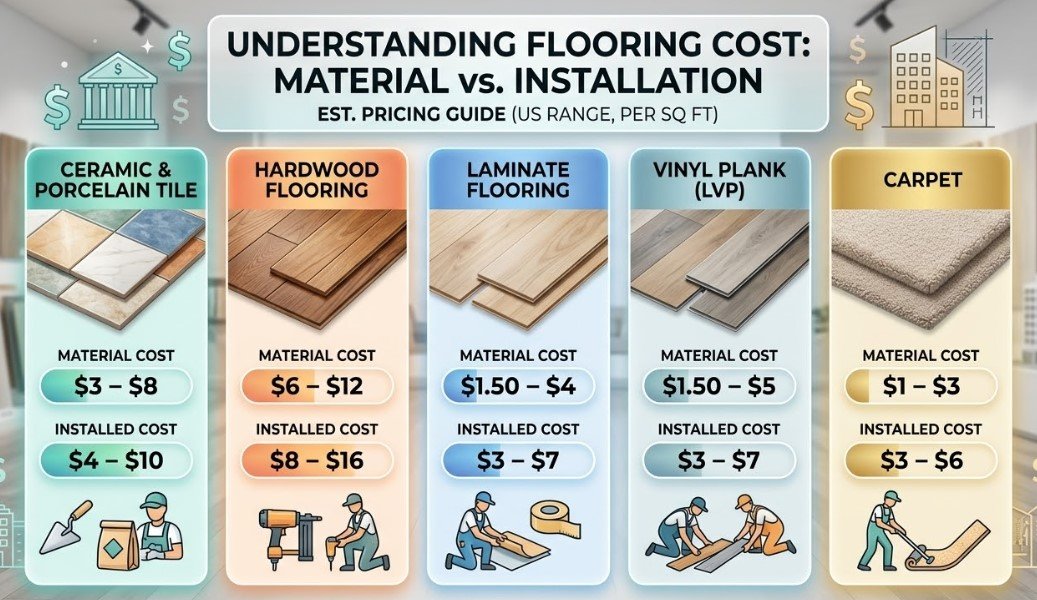
Flooring cost has two main components: the material cost and the installation costs. Both vary significantly depending on the floor type you choose, your location, and whether you hire a professional or do the work yourself.
Here is a general cost range per square foot for popular floor types in the US:
| Floor Type | Material Cost (per sq ft) | Installed Cost (per sq ft) |
|---|---|---|
| Ceramic & Porcelain Tile | $3 – $8 | $4 – $10 |
| Hardwood Flooring | $6 – $12 | $8 – $16 |
| Laminate Flooring | $1.50 – $4 | $3 – $7 |
| Vinyl Plank (LVP) | $1.50 – $5 | $3 – $7 |
| Carpet | $1 – $3 | $3 – $6 |
* These numbers can vary by state and city. Urban markets like New York, Los Angeles, and Chicago typically have higher installation costs than rural areas. Always get at least two or three contractor quotes for large projects and compare them against the estimate from our calculator.
One of the biggest decisions in any flooring project is selecting the right floor type for your space. Each material has its own strengths, maintenance needs, and ideal use cases. Here is a quick guide to help you choose:
Tile
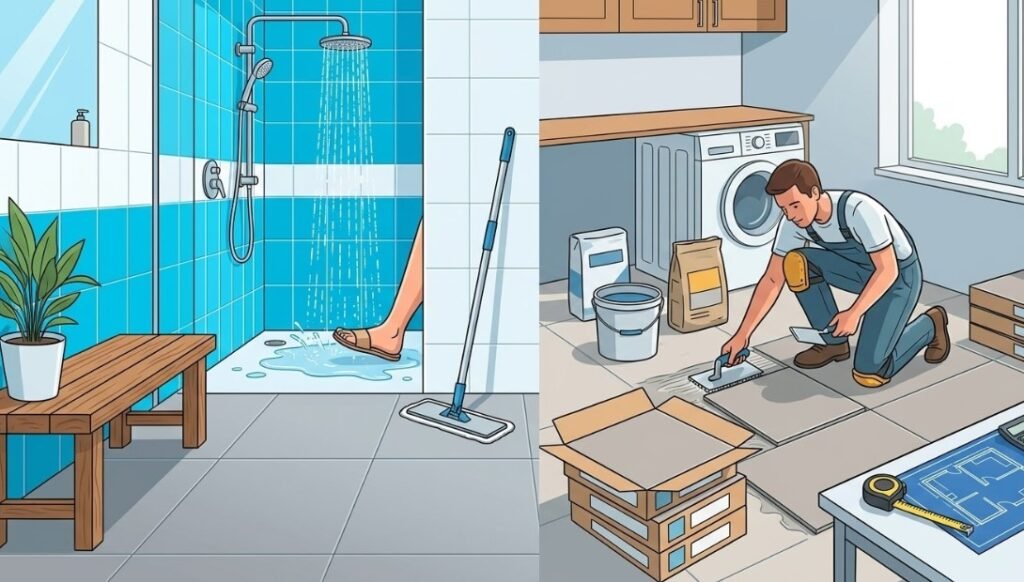
Tile is the go-to floor type for kitchens, bathrooms, entryways, and laundry rooms. It is waterproof, extremely durable, and easy to clean. The downside is that it feels hard underfoot and can be cold in winter. Installation costs are higher than most other floor types because proper laying requires professional skill, adhesive, and grout work. Tile is typically sold by the square foot or in box quantities, so our flooring calculator helps you figure out exactly how many boxes you need.

Hardwood
Hardwood is a classic choice for living rooms, dining rooms, and bedrooms. It adds warmth, character, and significant resale value to any home. Solid hardwood and engineered hardwood are the two main options, engineered hardwood is more resistant to moisture and can be installed in basements or over concrete. Hardwood is measured and sold in square feet, and a standard wastage factor of 10 to 15 percent is recommended when calculating how much to order.
Laminate
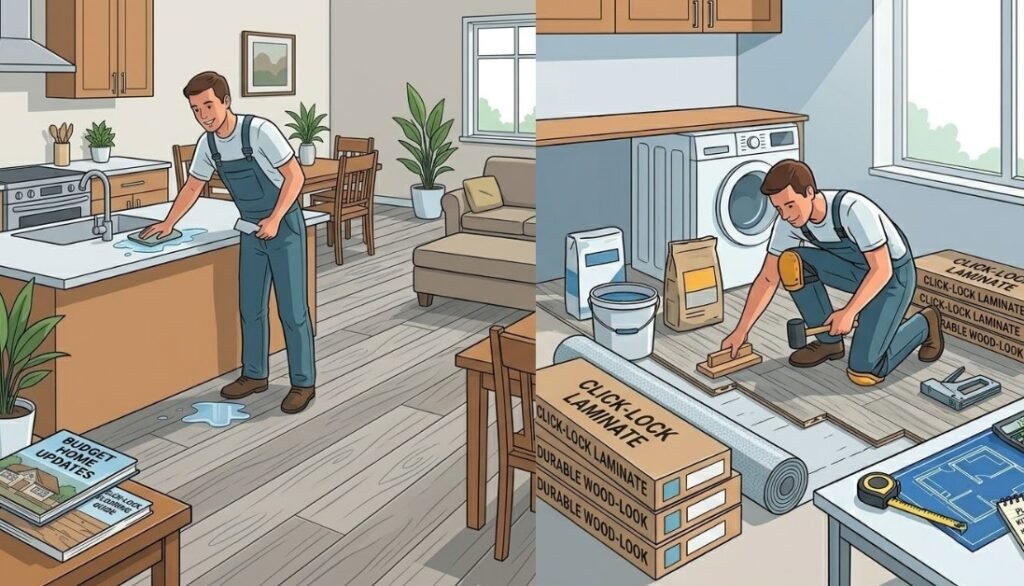
Laminate is a budget-friendly alternative to hardwood that mimics the look of wood or stone at a fraction of the cost. It is a popular DIY floor type because it uses a click-lock system that does not require adhesive or nails. Modern laminate options are surprisingly durable and water-resistant, making them suitable for kitchens and casual living areas. Our calculator includes an underlayment consideration built into the material cost field for laminate projects.
Vinyl / LVP
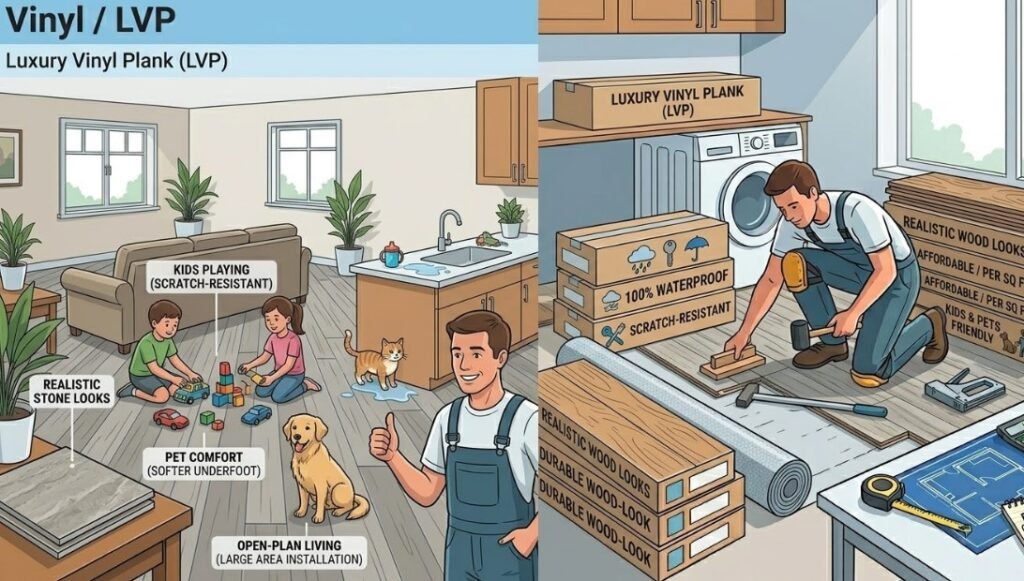
Luxury Vinyl Plank, or LVP, has become one of the most popular flooring choices in the US over the past decade. It is 100% waterproof, softer underfoot than tile or hardwood, scratch-resistant, and available in dozens of realistic wood and stone looks. LVP is ideal for households with kids and pets. It is also one of the more affordable floor types on a per-square-foot basis, making it a top pick for large-area installations.
Carpet
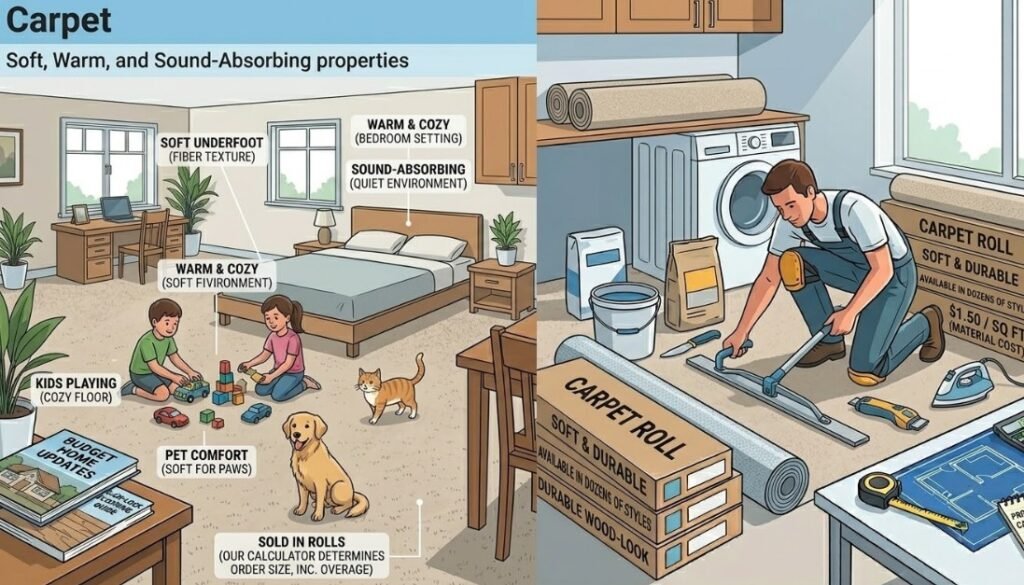
Carpet remains a preferred floor type for bedrooms, home offices, and basements because of its softness, warmth, and sound-absorbing properties. It is typically the least expensive option per square foot for materials, though professional installation is usually recommended. When calculating carpet, it is sold in rolls, so our flooring calculator helps you determine exactly how many square feet of carpet roll you need to order, including the recommended overage for proper fitting.

Every flooring professional will tell you to always order more material than your exact floor area. That extra amount, the wastage factor, accounts for cuts, mistakes, irregular room shapes, and future repairs. Here is how much extra to plan for:
Best for simple rectangular rooms with straight-lay patterns and no complex cuts.
The standard recommendation for most residential flooring projects with normal room shapes.
Recommended for diagonal tile patterns, herringbone hardwood layouts, or rooms with lots of doorways, alcoves, and cut-outs.
One of the biggest factors affecting your total flooring cost is whether you install it yourself or hire a professional.
DIY installation can save you anywhere from $1.50 to $5 per square foot in labor, which adds up quickly on large projects. A 1,000-square-foot home with DIY installation could save you $2,000 to $5,000 compared to hiring a contractor.
Laminate and LVP are the easiest for beginners, their click-lock systems require no adhesive and minimal tools. In our flooring calculator, you can set the labor cost per square foot to zero if you are doing the job yourself, giving you a clear material-only estimate for your budget planning.
DIY flooring is only practical for certain floor types. Hardwood is moderately difficult, requiring a nail gun and floor sander. Tile installation is the most technically demanding and is generally best left to professionals for large areas, as improper installation leads to cracked tiles and uneven grout lines.
For hardwood and tile projects, always get at least two to three quotes from licensed flooring contractors in your area and compare them against our calculator estimate to ensure fair pricing.
These are the things experienced flooring professionals wish every homeowner knew before starting a project.
Always double-check your length and width measurements before ordering. A small measurement error in a large room can mean dozens of extra square feet, or falling short.
Tile and hardwood from different production lots may have slight color variations. Always buy all your material from the same batch or dye lot.
If you are installing different floor types in adjacent rooms, budget for transition strips between the two surfaces.
A flat, clean subfloor is essential for all floor types. Uneven or damaged subfloors will cause premature wear, squeaks, and cracked tiles. Subfloor repair is a hidden cost that many homeowners overlook.
Always keep the leftover flooring material after your project is done. If a plank or tile gets chipped or cracked years later, you will be glad to have a matching piece on hand for repair.
Even if you are only replacing one room at a time, using the multi-room feature gives you a full picture of what a whole-home renovation would cost, useful for long-term budget planning.
Answers to the most common questions homeowners and contractors ask about flooring estimates.
Whether you are a first-time homeowner replacing carpet in a single bedroom or a seasoned contractor estimating materials for a full home renovation, our free Flooring Calculator gives you the accurate square footage, material quantity, and cost estimate you need, in seconds.
Stop guessing at the hardware store. Stop overpaying for materials you do not need. And stop running short mid-project. Use our flooring calculator before every flooring project, big or small, and make every square foot count.
Explore our other free construction calculators and take the guesswork out of every project.
"Daniel Carter is a U.S.-based land valuation researcher. He specializes in simplifying complex land value calculations for American landowners, investors, and buyers."
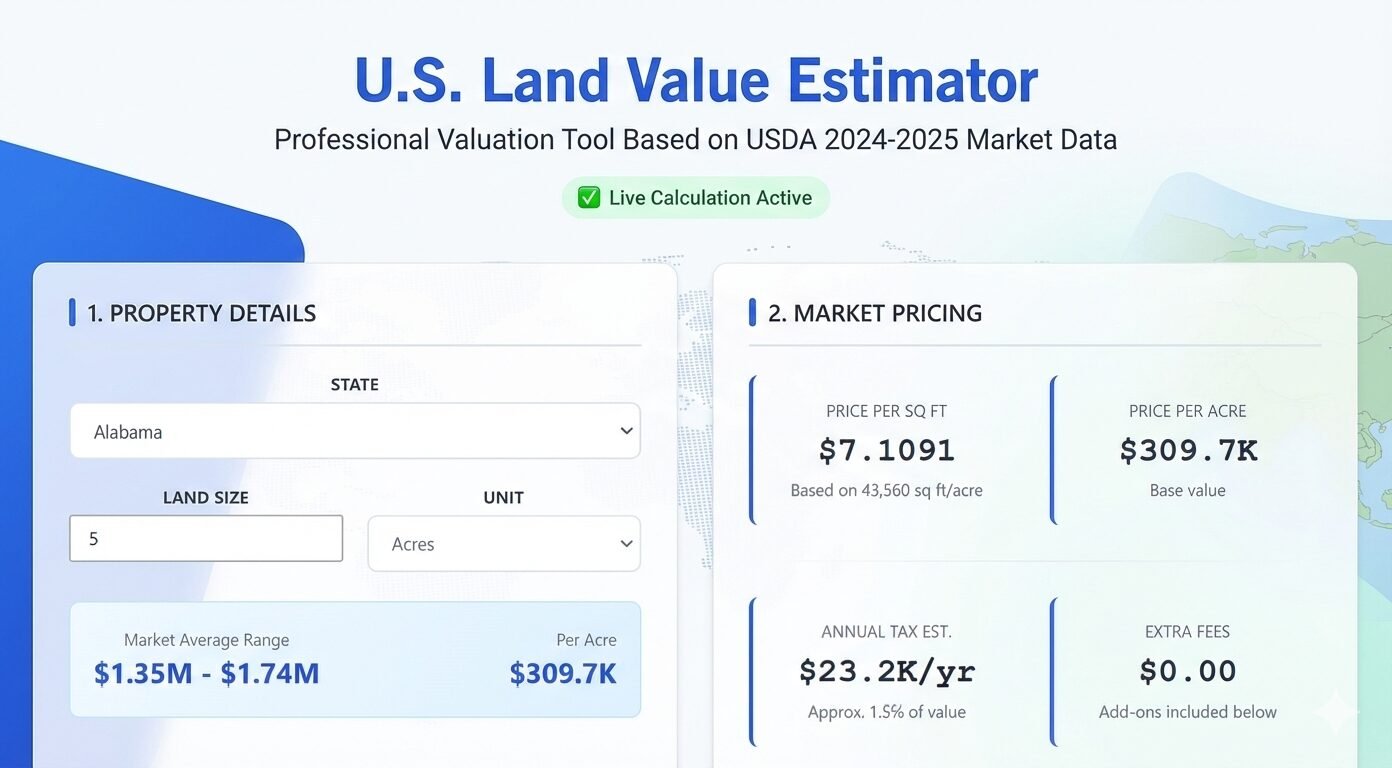
Our free estimator gives you an instant, data-backed market estimate for any vacant land or property lot, no signup, no credit card, no hassle.
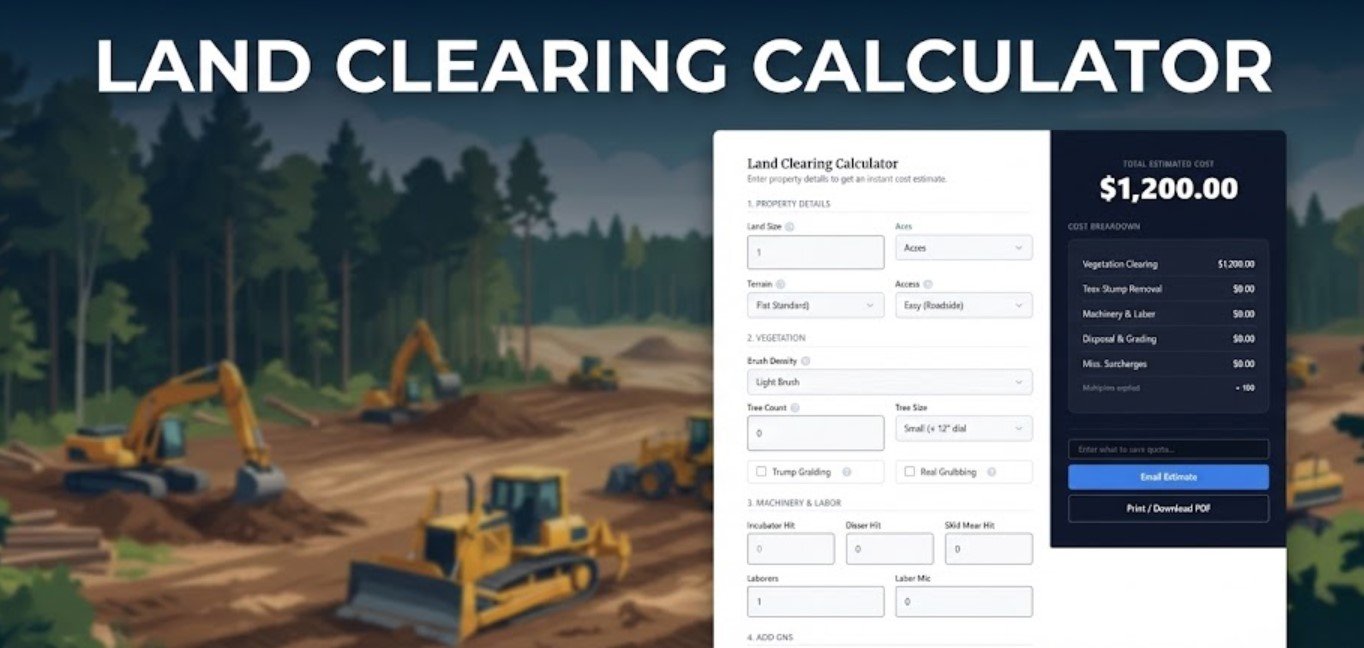
We built this Advanced Calculator to help you generate a detailed, itemized estimate in seconds, so you can talk to contractors with confidence.
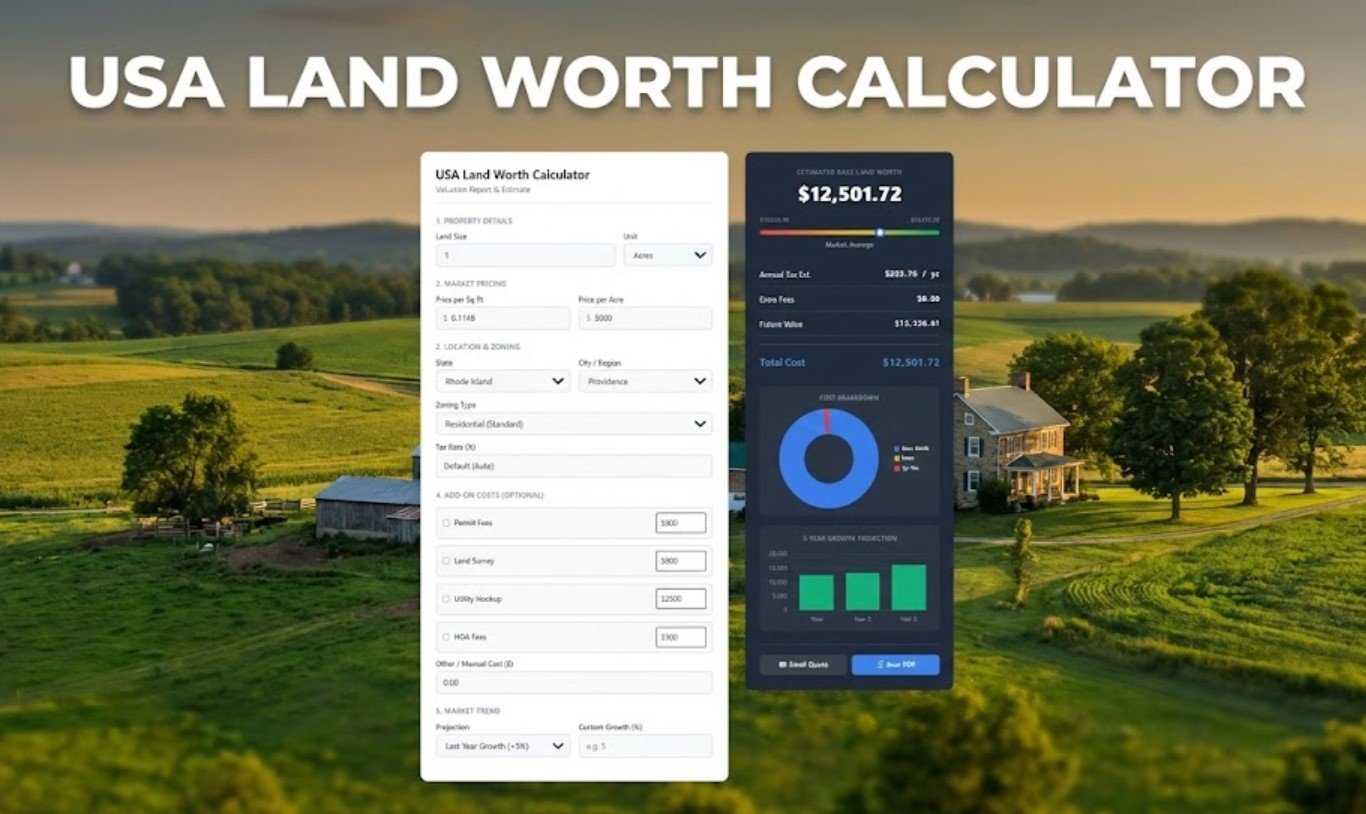
USA Land Worth Calculator, a free tool that gives you fast, accurate land value estimates. Unlike simple calculators, it analyzes real factors like state taxes, city demand, zoning rules, and development costs.
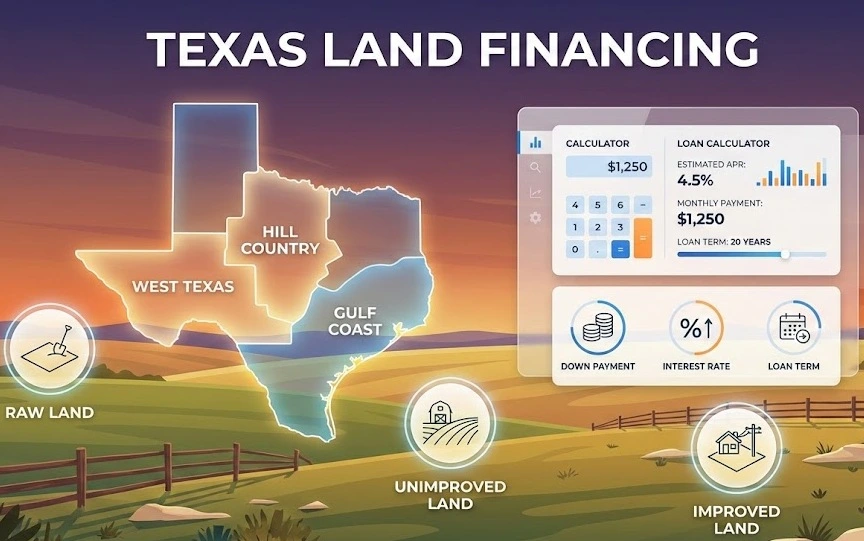
Our Texas Land Loan Calculator gives you accurate, Texas-specific estimates based on real land types, regional prices, and lender rules like VLB and Farm Credit.
How was your experience with this calculator?
Thank You!
Your review has been submitted for moderation.
We use cookies to improve your experience on our site. By using our site, you consent to cookies.
Manage your cookie preferences below:
Essential cookies enable basic functions and are necessary for the proper function of the website.
These cookies are needed for adding comments on this website.
Statistics cookies collect information anonymously. This information helps us understand how visitors use our website.
Google Analytics is a powerful tool that tracks and analyzes website traffic for informed marketing decisions.
Service URL: policies.google.com (opens in a new window)