Professional Land Development Cost Calculator
Who are you?
We will customize the experience based on your requirements.
What is your goal?
Step 2 of 2
🏗️ Land Development Analyst
$0Introduction
Planning a successful real estate project starts with understanding the numbers behind it. Our land development cost calculator helps property owners, investors, and developers quickly estimate the financial requirements of different development projects. Instead of relying on rough guesses, this tool provides structured cost estimates based on important development factors such as land size, preparation work, permits, and infrastructure needs.
Whether you are evaluating a small property improvement or planning a larger development project, this calculator helps you gain a clearer view of potential expenses before making major investment decisions.

What is a Land Development Cost Calculator?
A development cost calculator is a planning tool used to estimate the financial requirements of land and property development. It helps investors, planners, and builders understand the potential project cost before construction or infrastructure work begins. Instead of manually reviewing dozens of financial variables, the calculator gathers key inputs and processes them to provide a quick estimate for the total project budget.
In most real estate planning scenarios, a developer must analyze multiple expenses such as land purchase, preparation, permits, and utilities. A modern calculator simplifies this process by organizing these inputs into a structured model that automatically calculates developer expenses based on the information provided.
By using this type of tool early in the planning stage, professionals can compare different development scenarios, evaluate financial feasibility, and make better investment decisions with greater confidence.

Key Factors That Affect Land Development Costs
Understanding the major components that influence land development costs is essential before starting any property project. Every development site is different, and several financial elements can significantly affect the final budget. By analyzing these factors early, developers and investors can produce more accurate cost estimates and avoid unexpected expenses later in the process.
Cost of the Land
One of the largest expenses in any project is the cost of the land itself. Land prices vary widely depending on location, zoning regulations, accessibility, and market demand. Properties located near cities or commercial zones usually carry higher purchase prices compared to rural or undeveloped areas.
Site Preparation
Before construction can begin, the land often requires extensive site preparation. This process may include clearing [Land Clearing Cost Calculator] vegetation, grading the terrain, soil testing, drainage improvements, and preparing the property for utilities and road access. These activities can represent a significant portion of early development spending.
Building Permit and Regulatory Fees
Another critical factor is obtaining the required building permit and meeting local regulations. Development projects must comply with zoning laws, safety standards, and environmental rules. Permit fees, inspections, and approval processes can add additional costs that developers must include in their planning.
Infrastructure and Utility Installation
Infrastructure development is another major component of project expenses. Roads, drainage systems, water supply, electricity connections, and sewer lines must often be installed before construction begins. These improvements are essential for making a property usable and can strongly influence the overall development budget.
By considering these key factors during the planning stage, developers can better estimate the financial scope of a project and prepare a realistic budget for successful land development.
Cost Per Square Foot in Land Development
One of the most common ways to estimate development expenses is by calculating the cost per square foot of land. Developers often use this method to quickly evaluate how much a project may cost based on the total size of the property. When planning development projects, understanding the relationship between land size and expenses helps create more accurate financial projections.
The total area of a property is usually measured in square feet, which represents the full size of the development site. By multiplying the estimated costs per square unit by the total square footage, developers can form a basic estimate of the expected development budget. This approach allows investors and planners to compare different properties and determine which projects may be financially feasible.
While cost per square foot calculations provide a helpful starting point, the final cost may still vary depending on factors such as infrastructure work, land conditions, and regulatory requirements. Using this method together with a reliable calculator helps produce clearer and more realistic project cost estimates.
How This Calculator Works
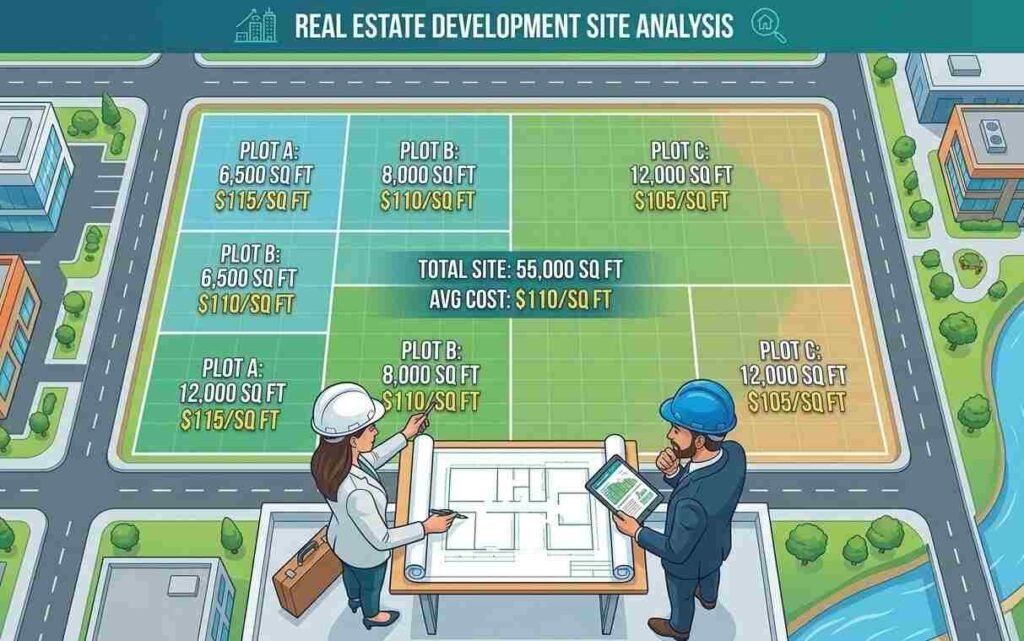
Using this tool is simple and designed to help users quickly estimate the potential cost to develop a property. The calculator guides you through a few basic inputs and then processes the information to generate a clear development cost estimate.
First, enter the total land size of your property, usually measured in square footage or acres. This helps determine the scale of the project. Next, add key development details such as preparation work, infrastructure requirements, and permit-related expenses. These inputs allow the system to understand the scope of the planned development.
Once the information is entered, the calculator works automatically to process the data and estimate overall expenses. The tool then calculates developer costs based on typical development factors and provides an estimated budget that can help guide early planning and investment decisions.
What Costs Are Included in the Calculation
When planning a development project, it is important to understand what expenses contribute to the overall land development costs. A reliable calculator considers multiple cost categories so users can get a clearer picture of the potential total project budget.
One of the first categories included is site preparation, which may involve clearing vegetation, grading the land, soil testing, and preparing the ground for construction. These early activities ensure that the property is ready for further development work.
Another essential cost is related to regulatory approvals, including the building permit and other local compliance requirements. Permits, inspections, and approval processes can vary depending on the location and project type, but they are an important part of the development budget.
Infrastructure and utilities are also key components. Development projects often require installation of water lines, electricity connections, sewer systems, and access roads. These improvements are necessary to make the property usable and functional for future construction.
By including these major cost categories in the calculation, the tool helps users create more reliable cost projections and better understand the financial scope of their development plans.
Benefits of Using This Development Cost Calculator
Using a reliable development cost calculator can make the early planning stage of a project much easier and more efficient. Instead of relying on rough guesses, developers and investors can quickly review structured financial information and understand the expected project cost before committing to a development plan.
One of the biggest advantages is faster planning. By entering a few key project details, users can generate quick cost estimates that help guide investment decisions and budgeting strategies. This allows developers to evaluate different land opportunities and compare potential development scenarios.
Another benefit is improved financial clarity. With a better understanding of possible expenses, property owners and planners can prepare a more accurate budget and reduce the risk of unexpected costs during the development process.

Example Land Development Cost Calculation
To better understand how development budgeting works, consider a simple example. Imagine a property with a total area of 10,000 square feet planned for a small residential development. If the estimated development expense is around $25 costs per square unit, the base cost calculation can provide an initial estimate for planning purposes.
First, developers evaluate the land area and multiply the size by the estimated cost per square unit. Based on this example, the base development estimate would start with the land size and expected preparation expenses.
Next, additional costs are added to the calculation. These may include site preparation activities such as grading and clearing the land, permit and approval fees, and the installation of utilities like water, electricity, and drainage systems. These elements are necessary before construction can begin.
After combining these expenses, developers can estimate the potential total project budget for the development. While actual costs may vary depending on location and project complexity, examples like this help investors understand how land development estimates are calculated in real-world planning.
Who Should Use This Calculator
This land development cost calculator is ideal for anyone involved in real estate and property development. It is particularly useful for real estate developers, investors, contractors, and land planners who need to estimate expenses for their development projects.
By providing quick and accurate cost estimates, the tool helps these professionals evaluate different project scenarios, plan budgets effectively, and make informed decisions before starting construction or purchasing land.


Daniel Carter
"Daniel Carter is a U.S.-based land valuation researcher. He specializes in simplifying complex land value calculations for American landowners, investors, and buyers."