
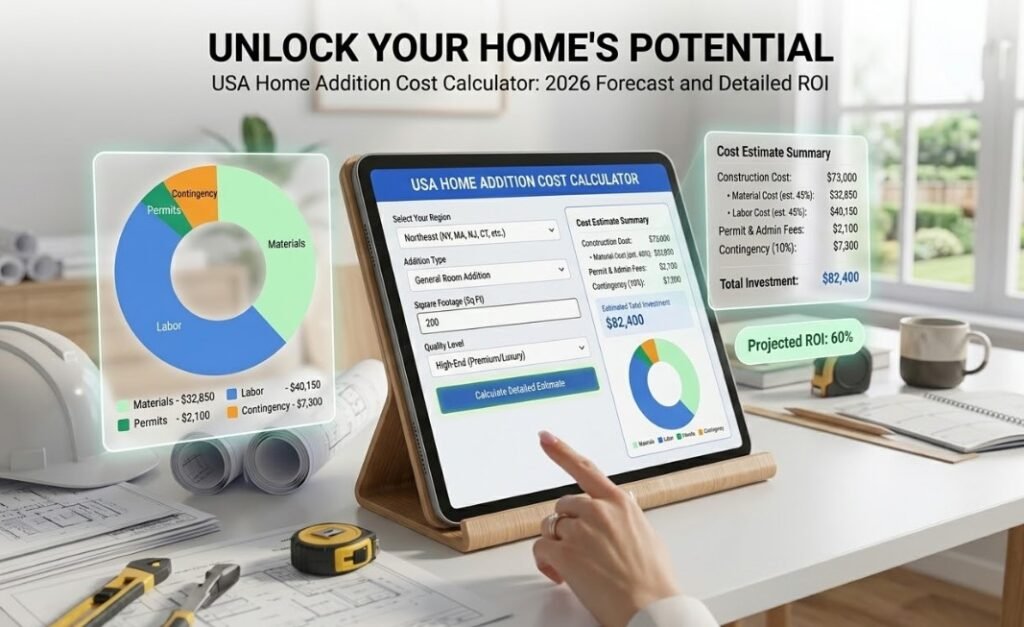
Expanding your home is more than just a construction project; it is a strategic investment in your future. In 2025 and 2026, the landscape of the US real estate market has shifted. With fluctuating mortgage rates and a limited inventory of new houses, the decision to invest in a home addition project has become increasingly popular. Instead of moving, homeowners are choosing to enhance their existing properties.
This guide provides a comprehensive analysis of the cost of a home expansion, helping you navigate the complexities of home improvements, from initial square footage planning to the final plumbing electrical inspections. [Plumbing Cost Estimator]
Estimating the price of construction manually can be a daunting task. Between the increasing costs of skilled labor and the volatility of material prices, a “rough guess” is no longer enough. An addition cost calculator serves as your first step toward financial clarity.
By inputting your square footage and selecting your addition type, you can generate cost estimates that reflect current market realities. Whether you are planning a simple family room extension or a complex multi-story build, having a data-driven starting point is essential for effective budgeting.
 As we move through 2026, the US construction market is navigating a phase of structurally elevated prices. After significant growth in previous years, activity has been moderated by persistent labor shortages and tariff uncertainties.
Construction input prices have surged by more than 43% since early 2020. While the rate of inflation has slowed compared to the 2022 peaks, the baseline remains high. In 2026, baseline total project costs escalation is expected to range between 4% and 6%. Additionally, new tariffs on imported materials, particularly steel and aluminum, could drive direct costs up by an additional 5% to 10% for specific projects.
The shortage of skilled labor remains the primary driver of rising home addition cost in 2026. The industry is projected to need approximately 500,000 additional workers to meet demand. With over 20% of the construction workforce aged 55 or older, the retirement of experienced crews combined with a lack of new entrants is pushing wages significantly higher.
To provide accurate logic for your addition project, we categorize costs based on material quality and design complexity:
The following data reflects the projected 2026 figures incorporating a 4‑6% escalation. Use this table to understand the home addition cost in your specific state.
| State | 2026 Cost / Sq Ft (Basic / Mid / High) | Permit & Admin Fee Range ($) |
|---|---|---|
| Alabama (AL) | $138 / $191 / $254 | $800 – $2,500 |
| Alaska (AK) | $228 / $281 / $334 | $600 – $3,000 |
| Arizona (AZ) | $170 / $233 / $297 | $300 – $900 |
| Arkansas (AR) | $159 / $217 / $276 | $500 – $2,000 |
| California (CA) | $228 / $339 / $456 | $1,200 – $3,500 |
| Colorado (CO) | $170 / $233 / $297 | $500 – $2,500 |
| Connecticut (CT) | $212 / $291 / $371 | $600 – $3,000 |
| Delaware (DE) | $201 / $276 / $350 | $500 – $2,800 |
| Florida (FL) | $159 / $223 / $286 | $800 – $2,500 |
| Georgia (GA) | $170 / $233 / $297 | $500 – $2,000 |
| Hawaii (HI) | $228 / $350 / $477 | $1,000 – $4,000 |
| Idaho (ID) | $180 / $228 / $276 | $200 – $600 |
| Illinois (IL) | $212 / $276 / $339 | $250 – $800 |
| Indiana (IN) | $180 / $244 / $307 | $500 – $2,000 |
| Iowa (IA) | $170 / $233 / $297 | $400 – $1,800 |
| Kansas (KS) | $170 / $233 / $297 | $400 – $1,800 |
| Kentucky (KY) | $159 / $223 / $286 | $500 – $2,200 |
| Louisiana (LA) | $159 / $223 / $286 | $600 – $2,400 |
| Maine (ME) | $180 / $244 / $307 | $500 – $2,000 |
| Maryland (MD) | $175 / $238 / $307 | $600 – $2,800 |
| Massachusetts (MA) | $212 / $291 / $371 | $800 – $3,200 |
| Michigan (MI) | $180 / $244 / $307 | $500 – $2,200 |
| Minnesota (MN) | $191 / $265 / $339 | $600 – $2,500 |
| Mississippi (MS) | $159 / $212 / $265 | $400 – $1,500 |
| Missouri (MO) | $180 / $249 / $318 | $500 – $2,000 |
| Montana (MT) | $170 / $233 / $297 | $400 – $1,800 |
| Nebraska (NE) | $170 / $233 / $297 | $400 – $1,800 |
| Nevada (NV) | $191 / $260 / $334 | $500 – $2,400 |
| New Hampshire (NH) | $186 / $249 / $318 | $500 – $2,200 |
| New Jersey (NJ) | $228 / $307 / $392 | $800 – $3,500 |
| New Mexico (NM) | $170 / $217 / $265 | $400 – $1,800 |
| New York (NY) | $212 / $291 / $371 | $1,000 – $4,000 |
| North Carolina (NC) | $191 / $254 / $318 | $600 – $2,500 |
| North Dakota (ND) | $170 / $233 / $297 | $400 – $1,800 |
| Ohio (OH) | $180 / $249 / $318 | $500 – $2,000 |
| Oklahoma (OK) | $159 / $217 / $276 | $400 – $1,800 |
| Oregon (OR) | $201 / $276 / $350 | $400 – $1,000 |
| Pennsylvania (PA) | $186 / $249 / $318 | $500 – $2,200 |
| Rhode Island (RI) | $212 / $286 / $360 | $600 – $2,800 |
| South Carolina (SC) | $191 / $260 / $329 | $500 – $2,000 |
| South Dakota (SD) | $170 / $233 / $297 | $400 – $1,800 |
| Tennessee (TN) | $159 / $223 / $286 | $500 – $2,200 |
| Texas (TX) | $159 / $223 / $286 | $200 – $900 |
| Utah (UT) | $170 / $228 / $286 | $400 – $1,800 |
| Vermont (VT) | $191 / $260 / $329 | $500 – $2,200 |
| Virginia (VA) | $191 / $260 / $329 | $600 – $2,800 |
| Washington (WA) | $196 / $265 / $339 | $500 – $2,000 |
| West Virginia (WV) | $180 / $228 / $276 | $400 – $1,800 |
| Wisconsin (WI) | $191 / $260 / $329 | $500 – $2,200 |
| Wyoming (WY) | $170 / $228 / $286 | $400 – $1,800 |
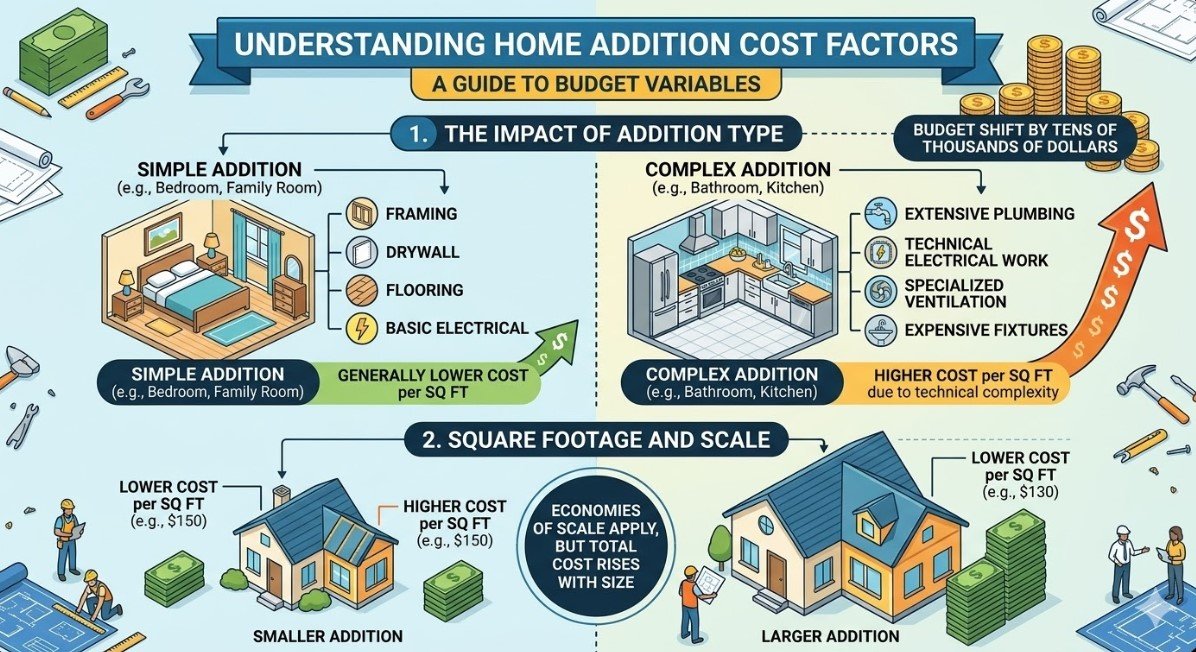
Every addition project is unique, and several variables will dictate your final invoice. The most significant factors including addition type, location, and the quality of finishes can shift a budget by tens of thousands of dollars.
Not all rooms are created equal. A room addition intended for use as a bedroom or family room is generally the most straightforward. These “dry” rooms require framing, drywall, flooring, and basic electrical.
In contrast, bathroom additions and kitchen extensions are “wet” rooms. They involve extensive plumbing electrical work, specialized ventilation, and expensive fixtures. Because of the technical complexity, these projects often have a much higher cost per square foot than a standard living area.
In the construction world, economies of scale apply, but only to a certain extent. While a larger addition project might have a slightly lower cost per square foot, the total home addition cost will naturally rise with size.
Complete Guide to Land Development Costs in the USA
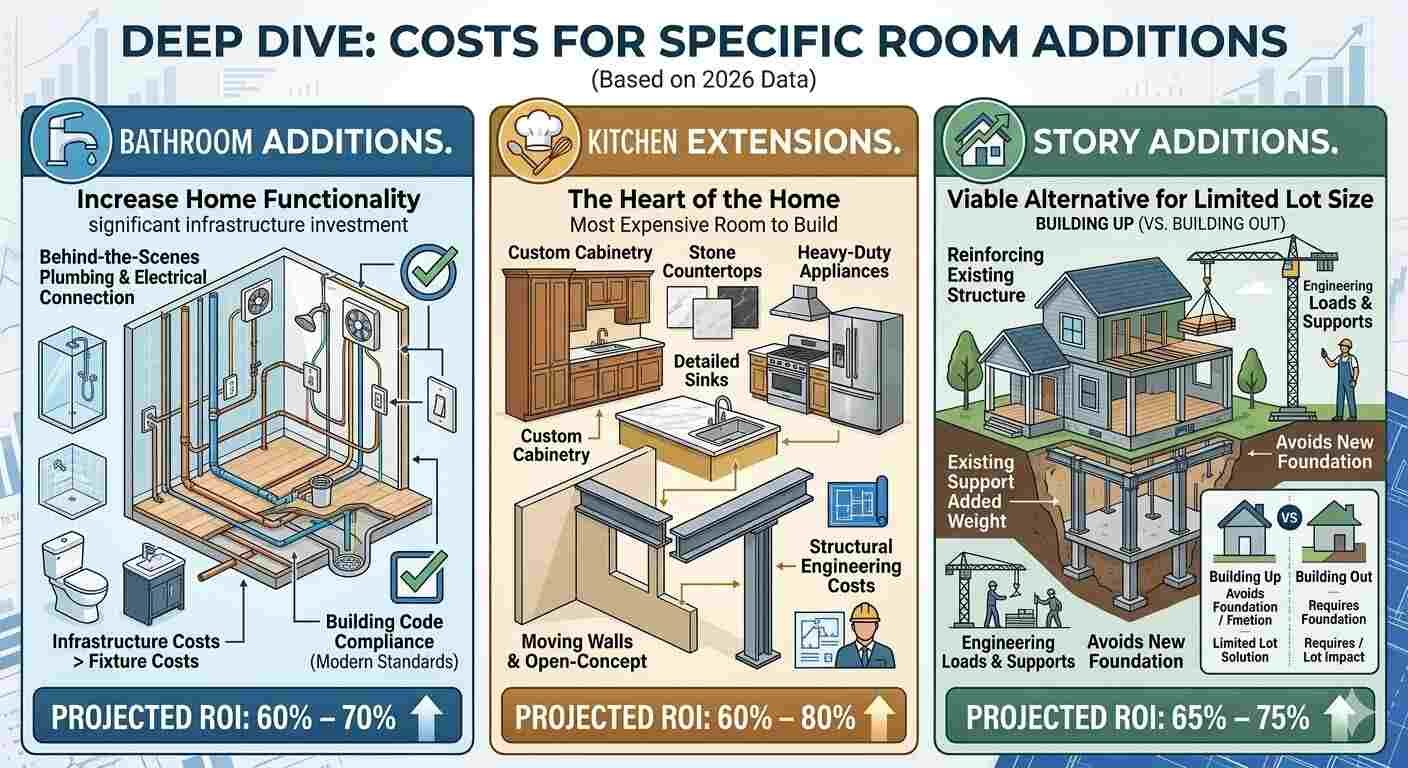
Adding a bathroom is one of the best ways to increase the functionality of your home. However, it requires a significant investment in infrastructure. You aren’t just paying for the toilet and the vanity; you are paying for the behind-the-scenes plumbing electrical connections that must meet modern building codes. Based on 2026 data, a bathroom addition typically sees a 60% – 70% ROI.
The kitchen is the heart of the home, but it is also the most expensive room to build. A high-end kitchen expansion involves heavy-duty appliances, custom cabinetry, and stone countertops. If you are moving walls to create an open-concept living space, you may also face structural engineering costs. The projected ROI for Kitchen Expansions is 60% – 80%.
If your lot size is limited, story additions are a viable alternative. Building a second story avoids the need for new foundation work, but it requires reinforcing the existing structure to support the added weight. This is a complex engineering feat that significantly impacts project costs. These projects typically yield a 65% – 75% ROI.
One of the most overlooked aspects of home improvements is the legal side of construction. Nationally, permit fees range from 0.5% to 2% of the total construction cost.
Building codes are in place to ensure safety. They dictate everything from the depth of your foundation to the type of wiring used in your plumbing electrical systems. Modern energy efficiency standards may also require specific types of windows and insulation, which can add to the initial project costs but save money on utilities in the long run.
To protect profit margins and stay within budget, savvy homeowners and contractors are adopting new strategies:
“Building out” requires new foundation work. “Building up” avoids foundation but requires structural reinforcement. Generally, building out is slightly cheaper unless your lot has major excavation challenges.
A standard 500 square foot room addition typically takes between 12 to 20 weeks, depending on the complexity of the plumbing electrical work.
In high-cost markets like New York or California, luxury materials and custom architectural work frequently push costs well above the national average.
Disclaimer
The data and cost estimates provided by this home addition cost calculator are based on 2026 market projections and regional averages. These figures are intended for informational and planning purposes only. Construction costs are highly volatile and can be influenced by local labor availability, specific site conditions, and material fluctuations. Always consult with a licensed local contractor and professional architect to obtain a binding quote for your specific addition project. We do not guarantee the accuracy of these estimates for legal or financial commitment.

"Daniel Carter is a U.S.-based land valuation researcher. He specializes in simplifying complex land value calculations for American landowners, investors, and buyers."
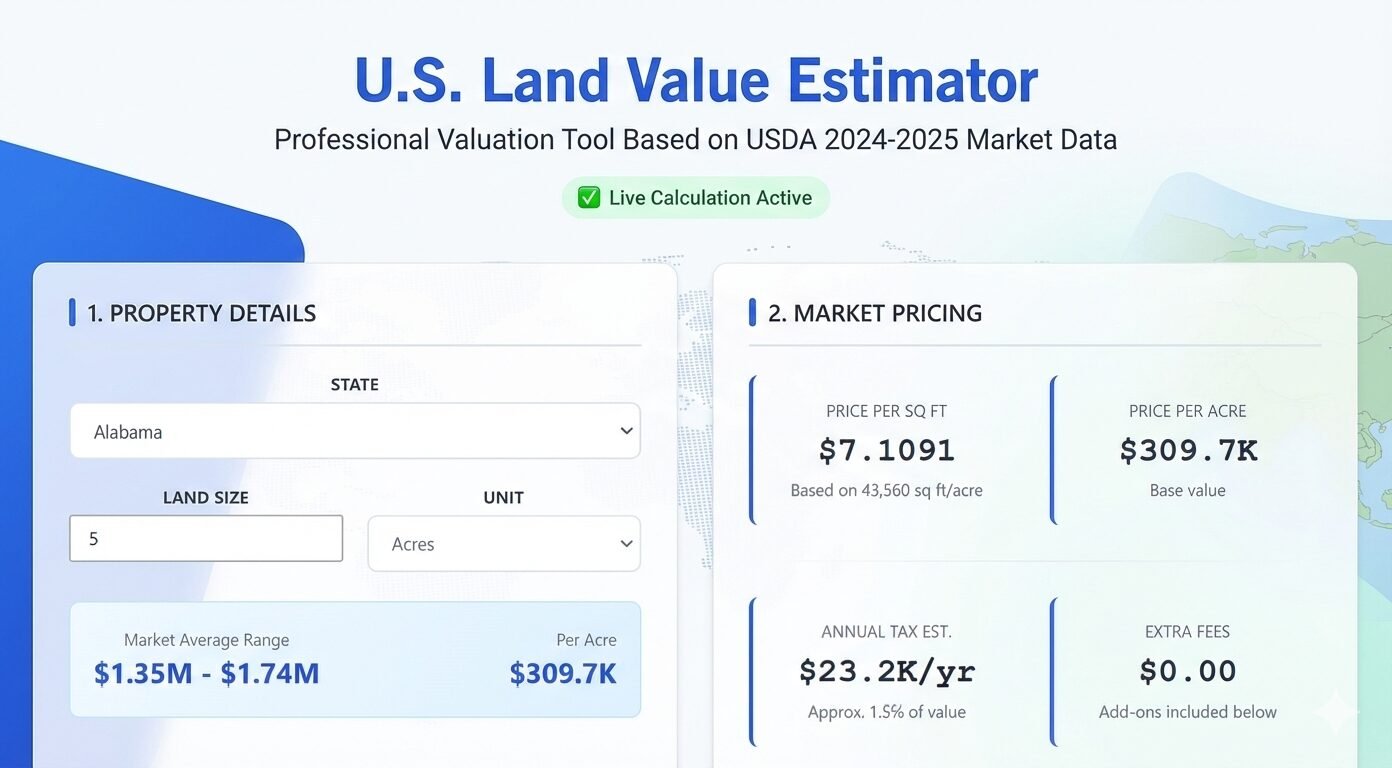
Our free estimator gives you an instant, data-backed market estimate for any vacant land or property lot, no signup, no credit card, no hassle.
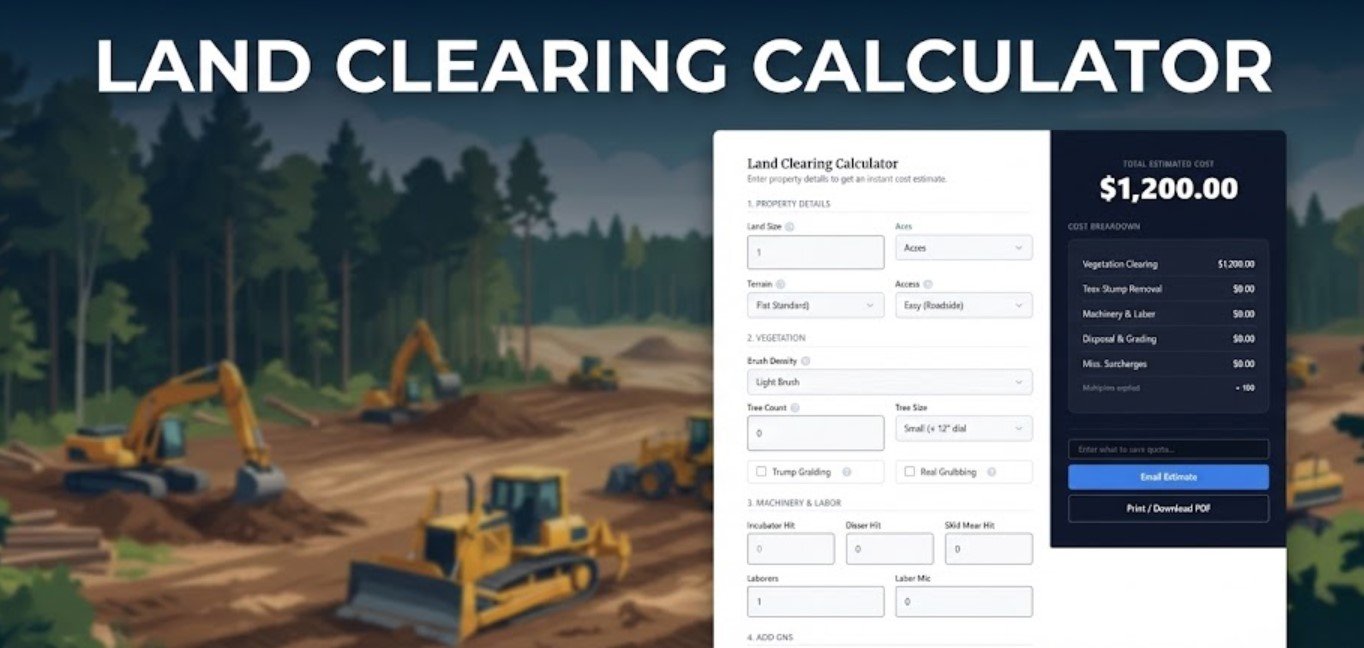
We built this Advanced Calculator to help you generate a detailed, itemized estimate in seconds, so you can talk to contractors with confidence.
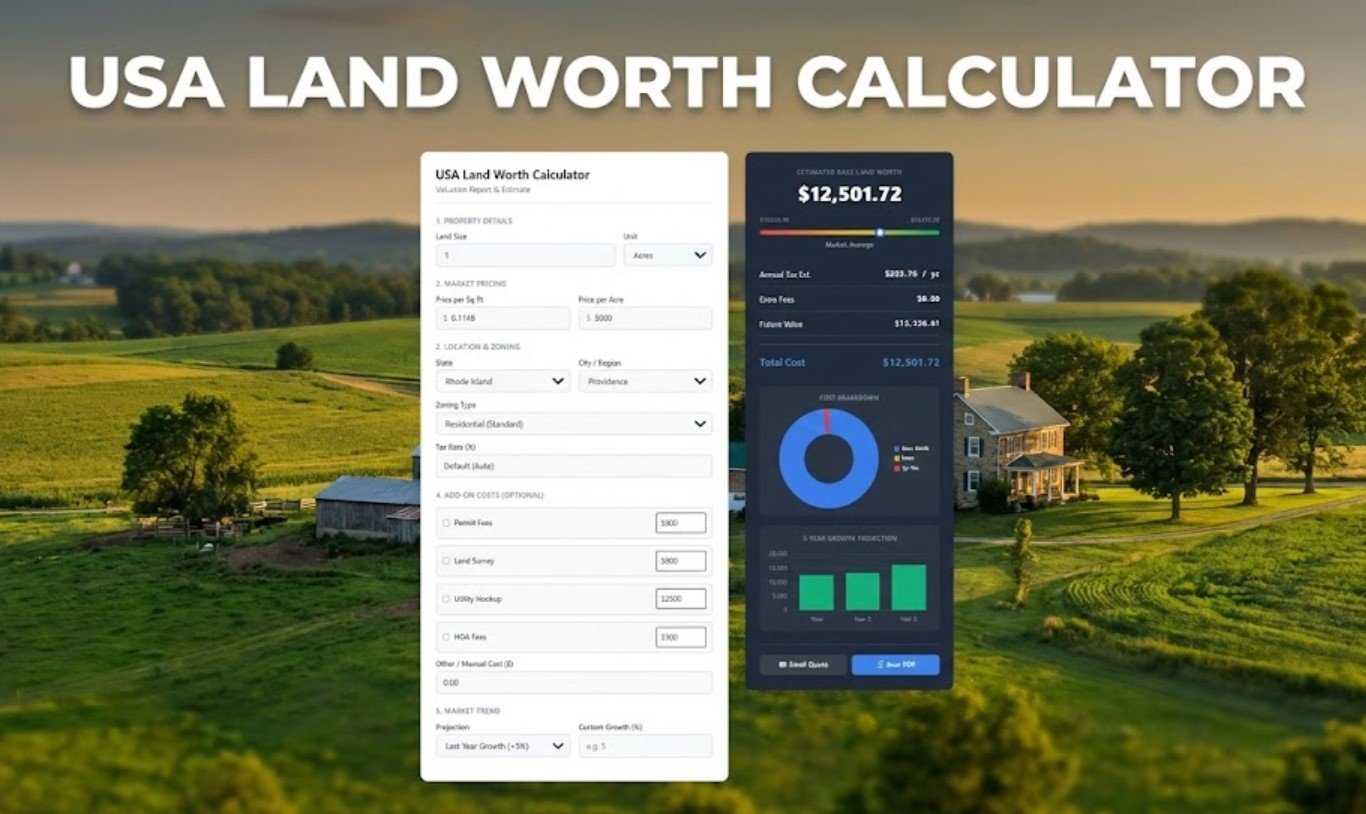
USA Land Worth Calculator, a free tool that gives you fast, accurate land value estimates. Unlike simple calculators, it analyzes real factors like state taxes, city demand, zoning rules, and development costs.
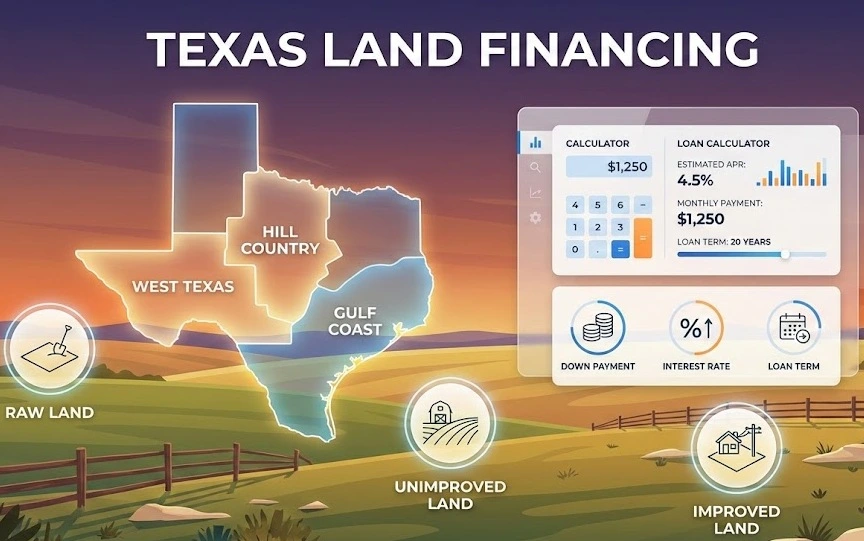
Our Texas Land Loan Calculator gives you accurate, Texas-specific estimates based on real land types, regional prices, and lender rules like VLB and Farm Credit.

Use our free home addition cost calculator to get estimates for square footage, labor, and permit fees for room, kitchen, and bathroom additions.
Operating System: Web Browser
Application Category: UtilitiesApplication